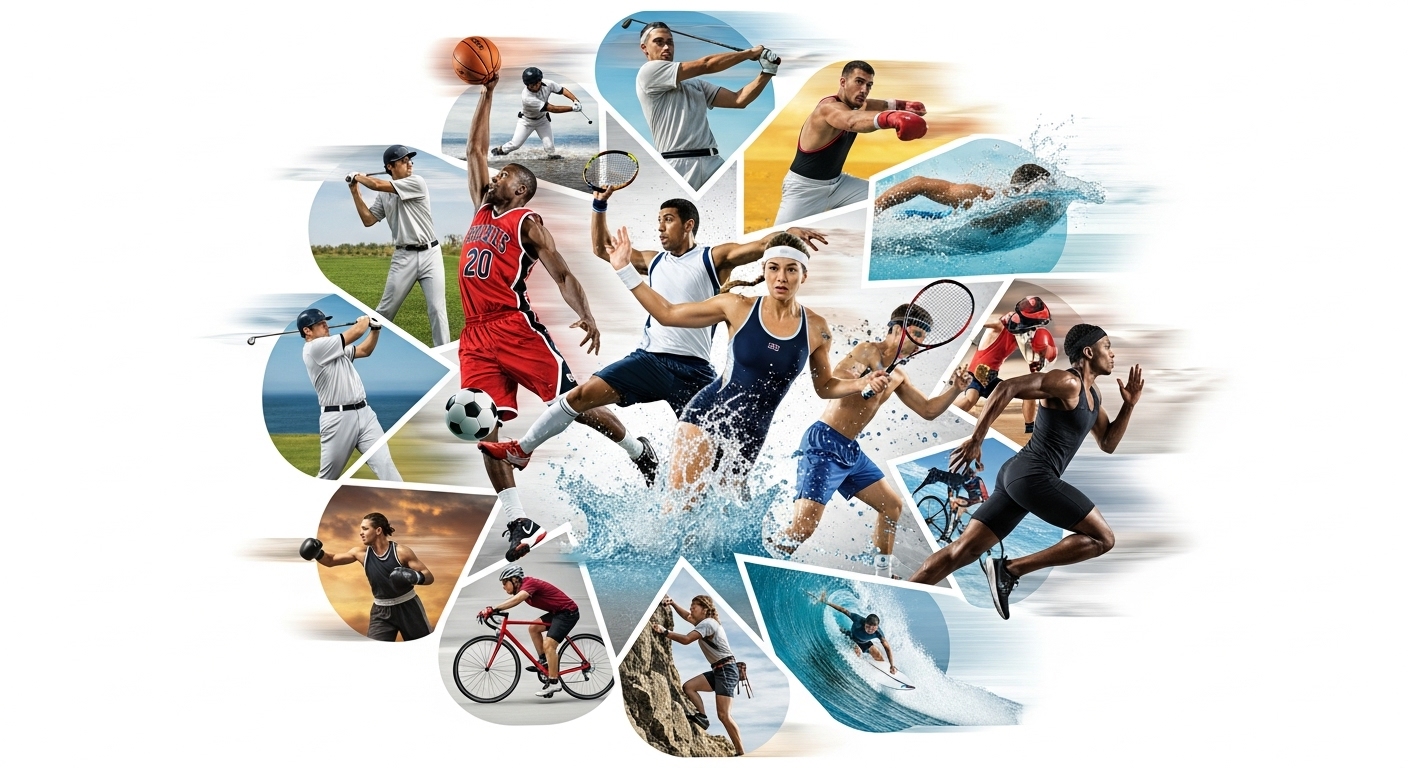

Sports have been an intrinsic part of human society for centuries. From the earliest forms of athletic competitions in ancient civilizations to the highly commercialized and digitalized global sporting events we experience today, sports have undergone an incredible transformation. They have transcended cultural, geographical, and generational boundaries, becoming not just a form of entertainment but a reflection of societal values, a source of national pride, and a powerful force for global unity. This blog post explores the evolution of sports, from their ancient origins to the modern-day phenomenon that captivates millions worldwide.
The Origins of Sports: From Survival to Celebration
The history of sports is deeply rooted in human evolution, with early forms of physical contests used for survival, skill development, and social bonding. Ancient societies integrated physical activities into their daily lives for practical purposes, such as hunting, warfare, and ritualistic practices.
Early Human Competition: Physical Skills for Survival
In the earliest days of human civilization, physical contests were primarily a means to sharpen essential survival skills. Early humans competed in various forms of combat, hunting, and running as a way to improve their chances of survival in harsh environments. These activities were essential for obtaining food, defending against predators, and developing coordination and strength.
In addition to survival skills, physical prowess also had a social function. Competition in these early societies often served to establish hierarchy within groups, with stronger or more skilled individuals gaining prestige and recognition. These early contests, while not formalized sports, laid the foundation for the idea that athleticism was a marker of human excellence.
Ancient Civilizations: Sports as Ritual and Celebration
As civilizations advanced, so did the role of sports. In ancient Egypt, Greece, and Rome, physical competitions became intertwined with religious rituals and celebrations. In Egypt, athletes competed in events like wrestling and archery, often as part of festivals honoring the gods. These events served as both a form of entertainment and a way to demonstrate physical skill in the service of religion and culture.
The ancient Greeks, however, are perhaps the most influential in shaping the modern conception of sports. The Olympic Games, which began in 776 BCE in Olympia, Greece, were the pinnacle of Greek athletic competition. Athletes competed to honor the gods, particularly Zeus, and the games were seen as a demonstration of human physical and mental strength. The ancient Olympics featured events like running, wrestling, and the pentathlon, and were considered a time of peace, where even wars were paused to allow athletes from different Greek city-states to compete.
The Roman Empire, too, embraced sports, but with a more gladiatorial and spectacle-driven focus. The Colosseum in Rome became the stage for brutal combat events, such as gladiator fights, animal hunts, and chariot races, which were held to entertain the masses. Although these events were far more violent than the Greek Olympic Games, they still played a central role in Roman society, highlighting the relationship between power, strength, and entertainment.
The Middle Ages: Sports as Entertainment and Martial Training
After the fall of the Roman Empire, the Middle Ages saw a shift in the nature of physical competitions. While athletic contests were still important for military training, they also became a means of socialization and entertainment, especially among the nobility. The chivalric code, which emphasized honor, courage, and physical prowess, influenced many medieval sports.
Jousting: The Knightly Sport
Jousting, one of the most iconic sports of the Middle Ages, was rooted in the military training of knights. This event involved two knights on horseback charging at each other with lances, aiming to unseat their opponent. Jousting tournaments became popular as both a form of entertainment and a way for knights to demonstrate their combat skills. These tournaments were often held during festivals or as part of royal celebrations, and they were attended by large audiences who cheered for their favorite knights.
Jousting, while derived from martial skills, also became a form of spectacle and social bonding, with elaborate ceremonies, costumes, and pageantry. It was a way for knights to gain fame, honor, and favor from monarchs and noble families.
Medieval Ball Games: The Precursors to Modern Football
In medieval Europe, early versions of ball games began to emerge. These games were often played in villages, with minimal rules and large numbers of participants. One early form of football was played in England, where opposing teams would attempt to move a ball from one end of a town to the other. These games were rough, disorganized, and chaotic, with little regard for boundaries or safety. Despite the disorder, they laid the foundation for the sport of football (soccer) and its later evolution into a more structured and organized game.
The Renaissance and Beyond: The Formalization of Sports
The Renaissance period marked a cultural rebirth in Europe, with a renewed focus on humanism, education, and physical fitness. During this time, sports began to evolve into more structured activities, with rules and formal organizations taking shape. This era saw the beginning of modern sports, as the idea of organized competition gained traction.
The Rise of Cricket
Cricket, a sport with deep roots in England, emerged as one of the first modern organized sports during the Renaissance. By the 17th century, cricket had become a popular pastime, and by the 18th century, the sport had established formal rules. The creation of the first cricket club in 1760 marked the start of the sport’s professionalization, and by the 19th century, cricket had spread to British colonies around the world, particularly in India and Australia.
The development of the sport’s formal rules and regulations, along with the establishment of international competitions, helped establish cricket as one of the world’s major sports. Today, cricket remains a beloved sport in many countries, with events like the Cricket World Cup drawing massive global audiences.
The Emergence of Tennis
Tennis, like cricket, has its origins in the medieval period, where it evolved from a French game called “jeu de paume,” or “game of the palm.” Players used their hands to strike a ball, and eventually, rackets were introduced. By the 19th century, tennis had become a popular sport among the upper classes, particularly in England.
The first Wimbledon Championships, held in 1877, marked the birth of modern tennis. With its strict rules, organized tournaments, and international appeal, tennis soon became a staple of global sports culture. Major tournaments like the French Open, US Open, and Australian Open further cemented tennis as one of the most prestigious sports worldwide.
The 19th and 20th Centuries: The Professionalization of Sports
The 19th and 20th centuries saw the rapid expansion and professionalization of sports. Industrialization, urbanization, and advances in transportation and communication played a pivotal role in the development of modern sports leagues and global competitions. The rise of mass media, particularly television, helped bring sports into the homes of millions of fans worldwide, further popularizing sports.
The Creation of Professional Leagues
In the late 19th century, professional sports leagues began to form, particularly in North America. Baseball was one of the first sports to have a professional league, with the formation of the National League in 1876. This was followed by the creation of the National Football League (NFL) in 1920 and the National Basketball Association (NBA) in 1946. These leagues not only created opportunities for athletes to earn a living from their sports but also helped shape the modern sports industry.
As professional leagues grew in size and influence, they introduced innovations like season schedules, playoffs, and standardized rules, making sports more competitive and more accessible to fans. The commercial success of these leagues also set the stage for the global expansion of sports, with international broadcasting deals and sponsorships bringing in billions of dollars.
The Growth of Global Competitions
Alongside the rise of professional leagues, global competitions like the Olympic Games, the FIFA World Cup, and the Tour de France became iconic events that united people across national borders. The Olympics, which had been revived in 1896, became the most prestigious international sports event, bringing together athletes from all over the world to compete in a spirit of peace and camaraderie.
The FIFA World Cup, first held in 1930, became the premier global football (soccer) tournament, attracting millions of viewers from every corner of the globe. These events became more than just sporting competitions—they were opportunities for countries to showcase their athletes, culture, and national pride on the world stage.
The 21st Century: Technology, Commercialization, and Esports
The 21st century has brought new challenges and opportunities for sports. Technological advancements, digital media, and the rise of esports have all played a significant role in reshaping the sports landscape. Athletes are now equipped with advanced training tools, and fans have unprecedented access to live broadcasts and real-time statistics through digital platforms.
The Impact of Technology on Sports
Technology has revolutionized nearly every aspect of sports. From performance-enhancing equipment and wearable devices to instant replay and data analytics, technology has allowed athletes to push the boundaries of what’s possible. Video review systems like VAR (Video Assistant Referee) in soccer and Hawk-Eye in tennis have introduced more accurate decision-making processes, ensuring fairer outcomes in matches.
Wearable fitness trackers and smart clothing have also become commonplace, helping athletes monitor their performance, recovery, and overall health. Coaches and managers now rely heavily on data to make tactical decisions, track player development, and reduce injury risks.
The Rise of Esports
Perhaps the most significant development in recent years has been the rise of esports—competitive video gaming. Esports has exploded in popularity, with millions of fans watching live streams of professional gamers competing in games like League of Legends, Dota 2, and Fortnite. Esports tournaments now attract massive global audiences, with prize pools reaching into the tens of millions of dollars.