
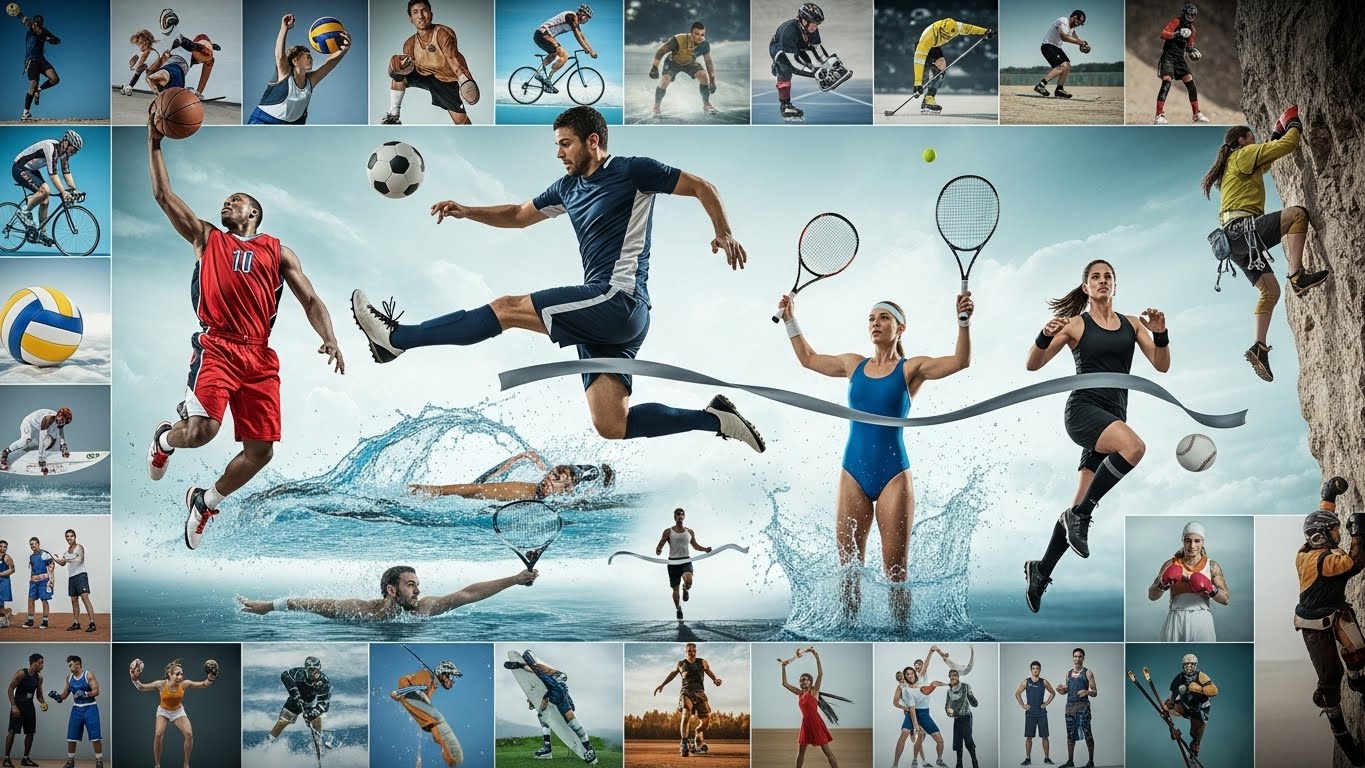
Sports have been an integral part of human society for millennia. From ancient rituals and competitions to modern professional leagues, sports have played a significant role in shaping cultures, fostering community, and providing entertainment to billions around the world. Whether it’s the adrenaline rush of a football match, the strategy of a chess game, or the elegance of figure skating, sports appeal to all aspects of human nature—physical, emotional, and intellectual. This blog explores the world of sports, its evolution, its societal impact, and what the future holds for this global phenomenon.
The Origins of Sports: A Shared Human History
The origins of sports date back to ancient civilizations. In early human history, physical competitions were often tied to rituals, training for warfare, or demonstrations of skill. Archaeological evidence suggests that ancient Egypt, Greece, China, and Mesoamerica all had forms of organized sport long before the modern era.
One of the earliest recorded instances of sports comes from ancient Greece, where the Olympic Games were born. These games, first held in 776 BC, were not only a religious festival honoring the Greek gods but also a showcase of physical prowess and athleticism. Events like running, boxing, and wrestling were central to the early Olympic Games, and they laid the foundation for the organized sports we recognize today.
Similarly, ancient China had its own traditional sports, such as cuju, a game similar to modern-day soccer, and archery competitions, which were integral to military training. In the Mesoamerican cultures, particularly the Maya and Aztec civilizations, a ball game known as tlachtli was played with a rubber ball and had both cultural and ceremonial significance.
The idea of competitive sports spread through the Roman Empire, where gladiatorial combat and chariot racing were both spectator sports and displays of power. While these ancient sports were often brutal, they laid the groundwork for the more regulated forms of competition that would emerge in later centuries.
The Evolution of Modern Sports
As societies evolved, so did sports. With the decline of the Roman Empire and the onset of the Middle Ages, organized sports largely faded from the mainstream. However, as Europe began to emerge from the medieval period, physical competitions slowly regained popularity. In the 16th and 17th centuries, sports like archery, horse racing, and sword fighting began to resurface as recreational activities.
The modern era of sports began to take shape in the 19th century. This period saw the creation of many of the sports we know today, including football, rugby, and cricket, which all emerged in Great Britain. The formation of the Football Association in 1863 in England standardized the rules of soccer, marking the beginning of modern association football or soccer. Similarly, the formation of the International Cricket Council (ICC) in 1909 helped create a universal set of rules for cricket that spread throughout the Commonwealth.
As industrialization took hold, so did the professionalization of sports. The invention of new technology and communication methods, such as the telegraph and later the radio, enabled fans to follow their favorite teams and athletes from afar. The introduction of major international tournaments, such as the FIFA World Cup and the Summer Olympics, created platforms for athletes to compete on the world stage.
In the United States, baseball, often called the “Great American Pastime,” became the first professional sport, with Major League Baseball (MLB) being founded in 1869. The 20th century saw the rise of American football, basketball, and ice hockey, turning these sports into national obsessions.
The Rise of Global Sports Leagues
In the 20th century, sports underwent a dramatic transformation. The increase in media coverage, especially television broadcasting, turned athletes into global superstars. The National Football League (NFL), National Basketball Association (NBA), and English Premier League (EPL) all grew into massive entertainment empires, attracting millions of fans from around the world.
Football (soccer), however, has undoubtedly become the world’s most popular sport, with an estimated 4 billion fans globally. The FIFA World Cup, held every four years, is the most-watched sporting event on the planet, uniting countries and cultures in the celebration of sport. The UEFA Champions League, which brings together the best football clubs from Europe, is another global spectacle that captivates audiences.
Beyond team sports, individual sports like tennis, golf, and boxing also gained widespread popularity. Events like Wimbledon, the US Open, and the Olympic Games brought individual athletes like Serena Williams, Tiger Woods, and Muhammad Ali into the international spotlight.
Sports as a Cultural Force
Sports are more than just games; they serve as a mirror of society and culture. Athletes often become cultural icons who transcend their respective sports. These individuals embody certain values—perseverance, determination, teamwork, and sportsmanship—that resonate with people around the world.
Football, for example, is not just a sport in countries like Brazil, Argentina, or Germany; it is an expression of national identity and pride. For many fans, supporting their country’s national team during the FIFA World Cup is more than just watching a game—it’s about being part of something larger than themselves. Similarly, sports teams like the New York Yankees, Manchester United, and the Los Angeles Lakers are more than just collections of players; they are symbols of local culture, community, and shared history.
Moreover, sports have the unique ability to bring people together across racial, social, and economic divides. In many cases, sports have been used as a platform for social change. Jackie Robinson breaking the color barrier in baseball, Muhammad Ali using his platform to protest the Vietnam War, and Colin Kaepernick kneeling during the national anthem to protest racial injustice are all examples of how sports intersect with political and social issues.
The Impact of Technology on Sports
As technology has advanced, so too has its impact on sports. From high-definition broadcasts to slow-motion replays and VAR (video assistant referee), the ways in which fans experience sports have been dramatically enhanced. Advances in equipment and performance tracking technology have made athletes faster, stronger, and more precise than ever before.
Wearable technology, such as heart rate monitors and GPS devices, allows athletes to track their performance in real time, helping them optimize their training and recovery. In professional football and basketball, for instance, players’ statistics are meticulously tracked, and coaches use data analytics to make strategic decisions.
In addition, social media has fundamentally changed how sports are consumed and experienced. Platforms like Twitter, Instagram, and YouTube allow fans to follow their favorite athletes, teams, and events in real time, creating a more immediate and interactive experience. Social media has also provided athletes with a platform to directly connect with their fans, building personal brands and boosting their visibility beyond the game.
The rise of eSports, or competitive video gaming, represents a new frontier in the sports industry. With a growing audience and large-scale tournaments like The International for Dota 2 and League of Legends World Championship, eSports is rapidly gaining traction as a mainstream form of entertainment. Professional gamers now have the same level of sponsorship, media coverage, and global recognition as traditional athletes.
The Commercialization of Sports: A Multi-Billion Dollar Industry
Sports have become a massive business in the 21st century, generating billions of dollars annually through ticket sales, sponsorships, merchandise, media rights, and advertising. The National Football League (NFL) is estimated to have a market value of over $100 billion, while the English Premier League (EPL) generates billions in television and broadcasting deals. Major companies like Nike, Adidas, and Under Armour invest heavily in sponsoring athletes and teams, while broadcasting giants like ESPN and Fox Sports pay vast sums for the rights to air live events.
One of the biggest contributors to this commercial boom has been the growing presence of sponsorships in sports. From Formula 1 to Olympic Games, brands are eager to associate themselves with top athletes and high-profile events. This has allowed teams and athletes to secure lucrative endorsement deals, elevating them to celebrity status and helping athletes build wealth beyond their playing careers.
Moreover, the globalization of sports has brought about international fan bases and increased viewership. Leagues like the NBA and NFL have expanded their reach into countries like China and Mexico, while tournaments like the FIFA World Cup and Olympics continue to unite fans from every corner of the globe.
The Future of Sports: Sustainability, Inclusion, and Innovation
The future of sports is shaped by several key trends, including the growing focus on sustainability, inclusion, and innovation. As climate change and environmental concerns become more pressing, the sports industry is beginning to adopt more eco-friendly practices. From sustainable stadiums to greener transportation options for teams and fans, there is an increasing emphasis on reducing the environmental impact of sporting events.
Inclusivity is also a major theme in the future of sports. Gender equality and the inclusion of marginalized communities are becoming central topics. Women’s sports, for instance, have gained more visibility and support in recent years, with growing audiences and increased investment in women’s leagues like the WNBA and Women’s World Cup.